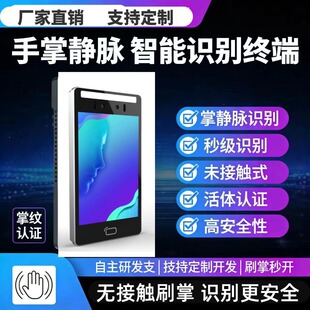
Supports secondary development for integrated time attendance and access control | open api sdk | suitable for enterprise/industrial park scenarios
in traditional access control systems, enterprises often face the embarrassment of a 'one-size-fits-all': fixed functions, closed interfaces, and inability to connect to internal management systems. especially in rapidly expanding manufacturing and industrial parks, an access control system that cannot be flexibly adjusted often becomes a bottleneck in management efficiency. now, the attendance and access control all-in-one machine that supports secondary development completely breaks this dilemma. with guangzhou tie
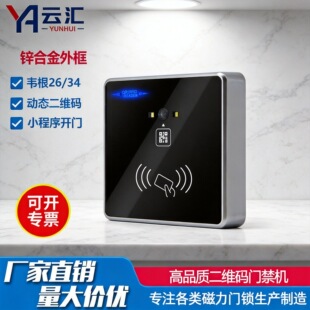
2026 high-cost-effective qr code door access control machine | ip65 waterproof offline access | 1688 buyer's guide
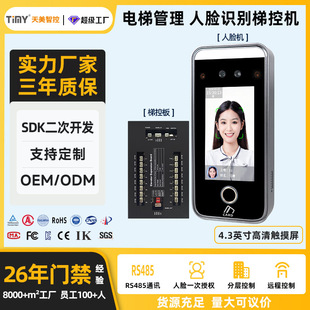
in the access control management of factories, parks, and office buildings, who doesn’t want to use a stable and cheap system? in the past, purchasing access control equipment often cost thousands of dollars, and the middlemen always added prices at every level. but now, you can buy a smart access control machine that supports dynamic qr code opening for only 30.31 yuan. like 'elevator face recognition fingerprint password card swiping elevator control face recognition access control 4.3inch elevator points
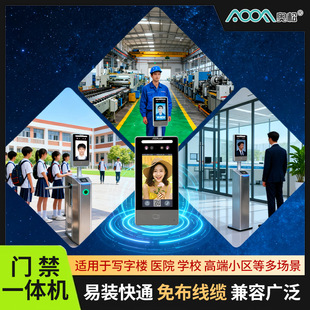
Supports iot platform integration for smart access control systems | 1688 buying guide
In traditional security setups, access control systems are often viewed as a high-priced, one-time investment. however, with the advancement of iot technology, what truly reduces deployment costs for businesses isn't the low price of a single device, but rather the compatibility and sustainable operational capabilities of the entire system. today, we're revealing why you should choose smart access control machines that support iot platform integration
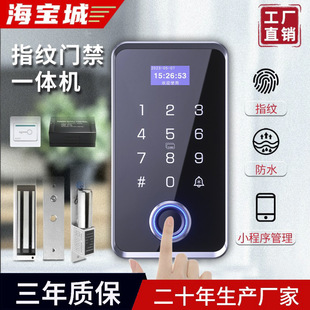
Waterproof design fingerprint access control machine|1688 cost-effective outdoor access control system
In humid southern construction sites, factories, and warehouses, traditional access control equipment often suffers from short circuits and frequent errors due to water infiltration. this is especially problematic during the rainy season, leading to employee timecard delays and chaotic entry and exit. this fingerprint access control machine, specifically designed for industrial environments, features a military-grade sealing process and boasts an **ip65 protection rating**, completely resistant to rain and dust
2026 fast identification fingerprint access control machine recommended | 618 early bird deals
In the daily grind of office life, peak-hour timecard clocking congestion has become the norm. traditional access control systems often take 3 seconds or even longer to complete identification, leading to common scenarios like employees queuing, missed punches, and attendance discrepancies. this efficiency bottleneck, particularly at the entrances and exits of large factories, office buildings, and industrial parks, directly impacts management efficiency and employee satisfaction. but now, the next-generation..

2026 high cost-effective access control machine recommended
As a seasoned professional deeply rooted in the smart security sector, i understand better than most what it takes for an access control system to be truly suitable for large-scale deployment. many products on the market boast "high-precision recognition," but in reality, they frequently suffer from false positives and slow response times, severely impacting traffic flow. however, i've found the answer through carefully selecting a few access control devices from the 1688 platform. for example, this..

2026 high-cost-performance smart door access machine with camera recommended|618 limited time discount
In the current wave of upgrades to traditional access control systems, more and more businesses are focusing on enhancing both security and efficiency. however, many procurement managers have faced challenges such as "expensive equipment, difficult installation, and poor after-sales service." now, an all-in-one smart access control machine integrating **facial recognition + real-time video surveillance + remote door opening** is becoming a smart choice for enterprise-level procurement. take aosong (
2026 high-cost-performance access control machine recommendations|618 enterprise procurement guide
In traditional procurement, a complete access control system can easily cost thousands of yuan, often with additional service fees and installation charges, which deters many small and medium-sized enterprises. but today, leveraging the direct-from-factory sourcing model of the 1688 platform, you can snag a 4.3inch access control machine with triple authentication – facial recognition, fingerprint recognition, and card swiping – for just 31.11 yuan. behind this..
2026 supports iot platform access to smart access control machines|compatible with alibaba cloud/huawei cloud|618 special offer
In 2026, a crucial year for the internet of everything, more and more industrial parks, office buildings, and community management companies are facing a core challenge: legacy access control systems are incompatible with their existing iot platforms. this leads to data silos, inefficient management, and rising operational and maintenance costs. especially with the acceleration of digital transformation in the lead-up to may 16th, businesses are increasingly struggling with this issue

2026 high-capacity facial recognition access control recommended | supports 100,000 face database · offline recognition
In large manufacturing workshops and industrial parks, traditional access control systems often fail due to complex environments and high traffic. "false positives," "lags," and "accidental triggers" not only impact production efficiency but can also lead to security vulnerabilities. however, today, high-capacity facial recognition access control systems are becoming the "invisible guardians" of industrial settings, thanks to their powerful algorithmic performance. take guangzhou, for example..
前往





Encyclopedia trending topics
Wholesale outdoor waterproof soft membrane backdrop light box manufacturer | 1688 project custom waterproof led light box2026 new aluminum alloy frame automatic food packaging and conveyor line - food grade certified | customization supported on 1688Custom couple's short-sleeve t-shirts - spring 2026 collection - minimum order of one piece - 1688 custom couple's apparel zoneSkin care coconut oil spring recommendations|1688 buyer encyclopediaFoldable gpps car organizer - 1688 essential for qingming holiday road trips【2026 spring/summer new arrivals】minimalist casual women's t-shirt, 100% cotton versatile basic short sleeve | 1688 buyer's encyclopedia【spring 2026 new arrival】women's 3/4 sleeve t-shirt - pure cotton, relaxed fit - your go-to for work and weekend getawaysMulti-layer stacked blind box display rack - 1688 spring renewal best selling acrylic dustproof storage rack
Popular products
换一换
未找到,再试试?
页面内容由AI生成,仅供参考