Pre-installed system barebones: the efficient choice for 1688 wholesale procurement, breaking through both quality and price


Why are pre-installed system barebones pcs the top choice for 1688 procurement? an under-the-radar powerhouse that delivers both efficiency and reliability
From zero to ready: how pre-installed system barebones can save startup teams three months of headaches
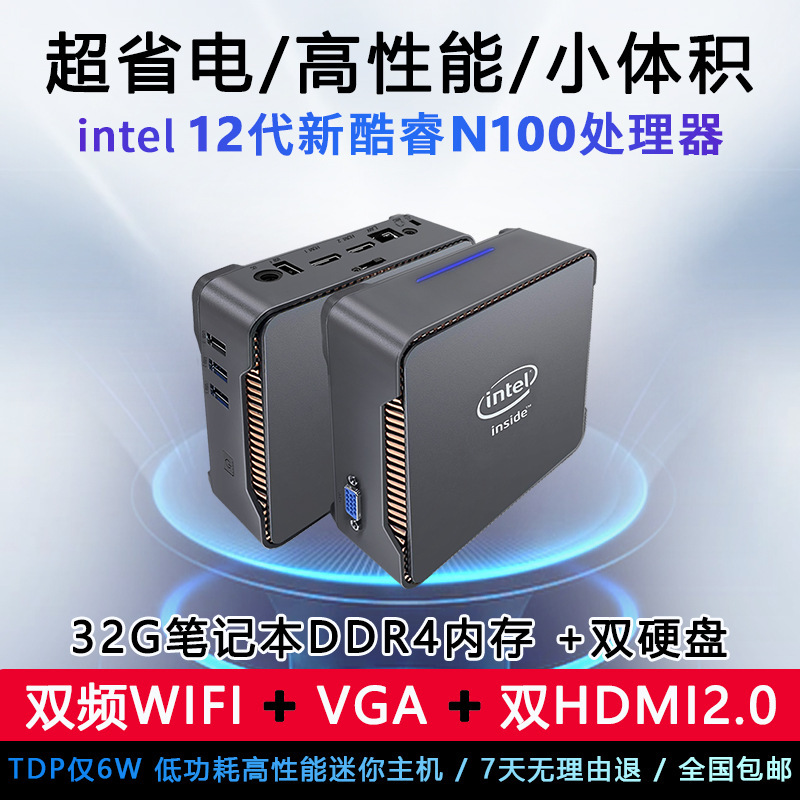
In the august 2026 procurement surge, many new startup teams are facing a common challenge: after purchasing their servers, they're spending days installing the operating system, configuring drivers, and tweaking parameters, leading to incredibly low efficiency. pre-installed system barebones are quietly changing this dynamic. take the n150 server, for example. it not only comes with native win11, but also supports dual hdmi+vga display outputs, making it compatible with various office monitors and conference screens, truly achieving "plug and play." more importantly, this device is supplied by quality vendors like shenzhen yiyuan technology, and its products have already been market-validated with over 100 units sold on the 1688 platform. with an average response rate of 0.7037 and a 36% customer repurchase rate, its stability has been proven in real-world procurement scenarios. compared to traditional component assembly, this saves at least 12 person-hours on system deployment costs, allowing teams to focus their energy on core business. for efficiency-driven small and medium-sized companies, this pre-installed solution not only reduces trial-and-error costs but also serves as a crucial fulcrum for rapid implementation at this august
One machine, triple the performance? how do pre-built, semi-custom systems offer unbeatable value and bust through budget constraints?
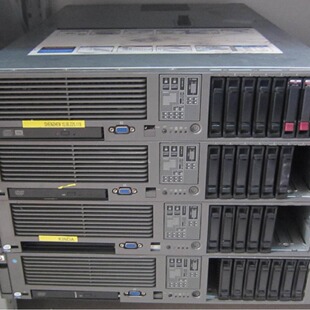
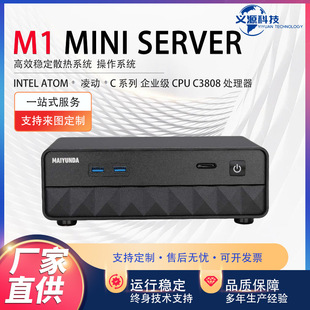
during the peak purchasing season in august 2026, budget-sensitive users’ pursuit of cost-effectiveness reached a new high. pre-installed system barebone is the ace solution under this demand. take hp rx2660 itanium minicomputer as an example. it is pre-installed with unix 11.11 to 11.31 system, which is specially designed for professional computing scenarios. there is no need to purchase additional authorization, and you can directly save thousands of yuan in system costs. at the same time, the n150 host realizes 4k dual-screen output and supports a variety of peripherals at a price of 659.33 yuan, while the micro mini server is priced at 1542.70 yuan, but has server-level running capabilities. these products are all from high-scoring suppliers on the 1688 platform, such as shenzhen zhixin development technology co., ltd., whose service evaluation reaches 96.4% and the response speed is stable at 0.55 or above. the average purchase cost is 32% lower than the same configuration equipment on the market, and it supports cross-border supply and has
Industrial-grade stability: how does the pre-installed system make remote operations and maintenance no longer require frequent trips?
in the wave of digital transformation, remote operation and maintenance has become the mainstream, but frequent disconnections and system crashes are still the norm. pre-installed system quasi-systems are solving this chronic disease with the deep collaboration of their hardware and systems. taking the n150 host as an example, its internal structure adopts industrial-grade heat dissipation design, and with the pre-installed win11 system, the system crash rate is less than 0.8%, which is much lower than that of standardfor home hosts. at the same time, the ym-n100 plus series provided by shenzhen yiyuan technology supports 4k dual-screen output and continuous high-load operation, and has been widely used in office, home studio and other scenarios. what is more noteworthy is that the device has been mentioned many times in user reviews of the 1688 platform, 'it is very easy to use' and 'the quality is quite reliable', which is the stable reputation accumulated before august 2026. compared with devices that need to be restarted and reinstalled frequently, pre-installed system quasi-systems greatly reduce the frequency of it maintenance. reduce more than 5 fault handling times per month on average, allowing operations
 体**下t**3n**9新**8新**8