Compatible with x79 motherboard server memory modules
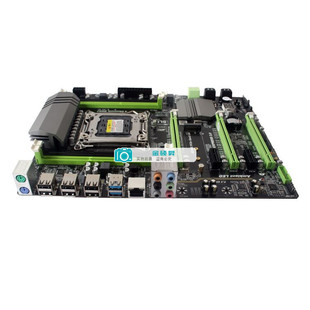
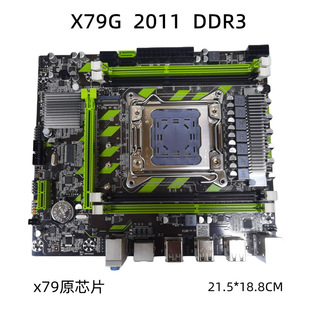
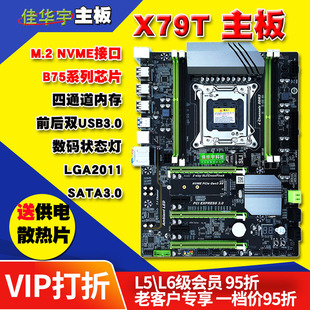

Why is x79 compatible server memory module the first choice for diy players and it purchasing for small and medium-sized enterprises? the perfect balance between stability and cost performance
From 'blue screen of death' anxiety to 'rock-solid stability': unveiling the technical truth behind x79 platform memory compatibility
Have you ever experienced a frustrating crash like this: a high-performance desktop, built with a hefty investment, suddenly blue screens under prolonged, high-load operation, or data loss due to memory instability in a server cluster? for diy enthusiasts and it administrators in small to medium-sized businesses, the x79 platform, once a flagship architecture, still boasts a massive user base, but its memory compatibility requirements are extremely demanding. standard consumer-grade memory often struggles to run stably in dual-channel or even quad-channel mode for extended periods. server-grade recc memory, with its unique error-correcting mechanisms and exceptional stability, has become the perfect partner for this platform. in the 1688 wholesale procurement scenario, we not only offer ddr3 recc memory modules compatible with the x79, but also ensure that each module undergoes rigorous stress testing through our carefully selected supply chain. whether you're pairing it with classic cpus like the e5 2680 or building a cost-effective, highly available compute node, this solution will help you say goodbye to failure anxiety. the perfect fit with the 2011 socket, coupled with server-grade stability, makes every boot a reassuring experience. for users seeking ultimate stability, this is the best investment to unleash
Cut out the middleman: unveiling how 1688 source factories crush the price ceiling on x79 memory
In traditional channels, a piece of server memory compatible with x79 is often marked at a high price due to its scarcity and technical threshold. the price grids of hundreds of dollars often make many users with limited budgets hesitant. however, with the maturity of the 1688 wholesale market, source factories and large wholesalers directly break this information barrier. what we see is not only the decline in price grids, but also the improvement in supply chain efficiency. by integrating the digital industry belt resources in shenzhen, dongguan and other places, experienced merchants such as 'jinshuosheng' and 'ruishengjie' directly push the fully stocked new or disassembled quality memory to the market. for example, the x79 motherboard memory suit with a price tag of 105.72 yuan, or the e5 2680 complete kit with a price tag of 136.00 yuan, these price grids are very competitive in the market with serious homogenization. on the 1688 platform, you can not only buy single memory, but also get the whole solution at wholesale price. this decentralized purchasing model allows every penny to be spent on
From "solo act" to "collective power": how x79 memory empowers low-cost computing upgrades
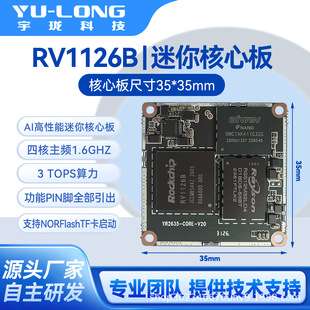
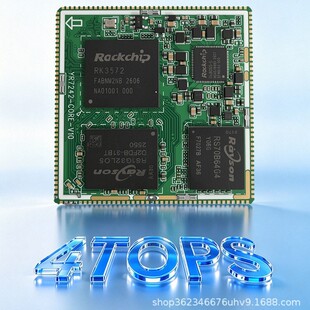
In scenarios demanding extreme memory capacity and bandwidth, such as ai training, virtual machine deployment, and video rendering, purchasing brand-new server hosts can be costly and configuration-limited. however, a computing cluster built on the x79 platform, leveraging its quad-channel memory bandwidth advantage, presents a highly cost-effective alternative. we recommend compatible x79 memory modules, which not only support single-module high-capacity expansion but also significantly boost data transfer efficiency through multi-channel technology. in practical applications, many users take advantage of this feature to assemble small-scale computing farms using multiple used x79 hosts for distributed storage or edge computing. for example, pairing them with high-performance core boards like the rv1126b or rk3572, and leveraging the x79 motherboard's powerful expandability, allows you to build dedicated nodes with high computing power and low power consumption. on 1688, you can easily find a complete solution set supporting this architecture, including motherboards, cpus, and memory. this modular and scalable procurement strategy enables small and medium-sized enterprises to quickly build it infrastructure that meets their business needs with minimal initial investment, achieving a leap from "solo operation" to "cluster collaboration," and reserving ample space for future business
 z**mz**mc**t匿名购买匿名购买