How to determine whether xinjiang specialty food suppliers can cooperate for a long time? look at these 6 continuous indicators
When sourcing xinjiang dried fruits and nuts, it's easy to verify qualifications and review samples during the initial partnership. however, what truly determines the success of a long-term relationship are the "sustained indicators" that take time to buildWith xiyu meinong as an example, this is a supplier of xinjiang specialty foods established in 2014, with a factory area of more than 17,000 square meters, bv certification and 14 patents. which signals in its public information can support the judgment of long-term cooperation, and which still need to be verified by the buyer? this article reviews 6 key sustainability indicators to help buyers establish a reusable evaluation framework
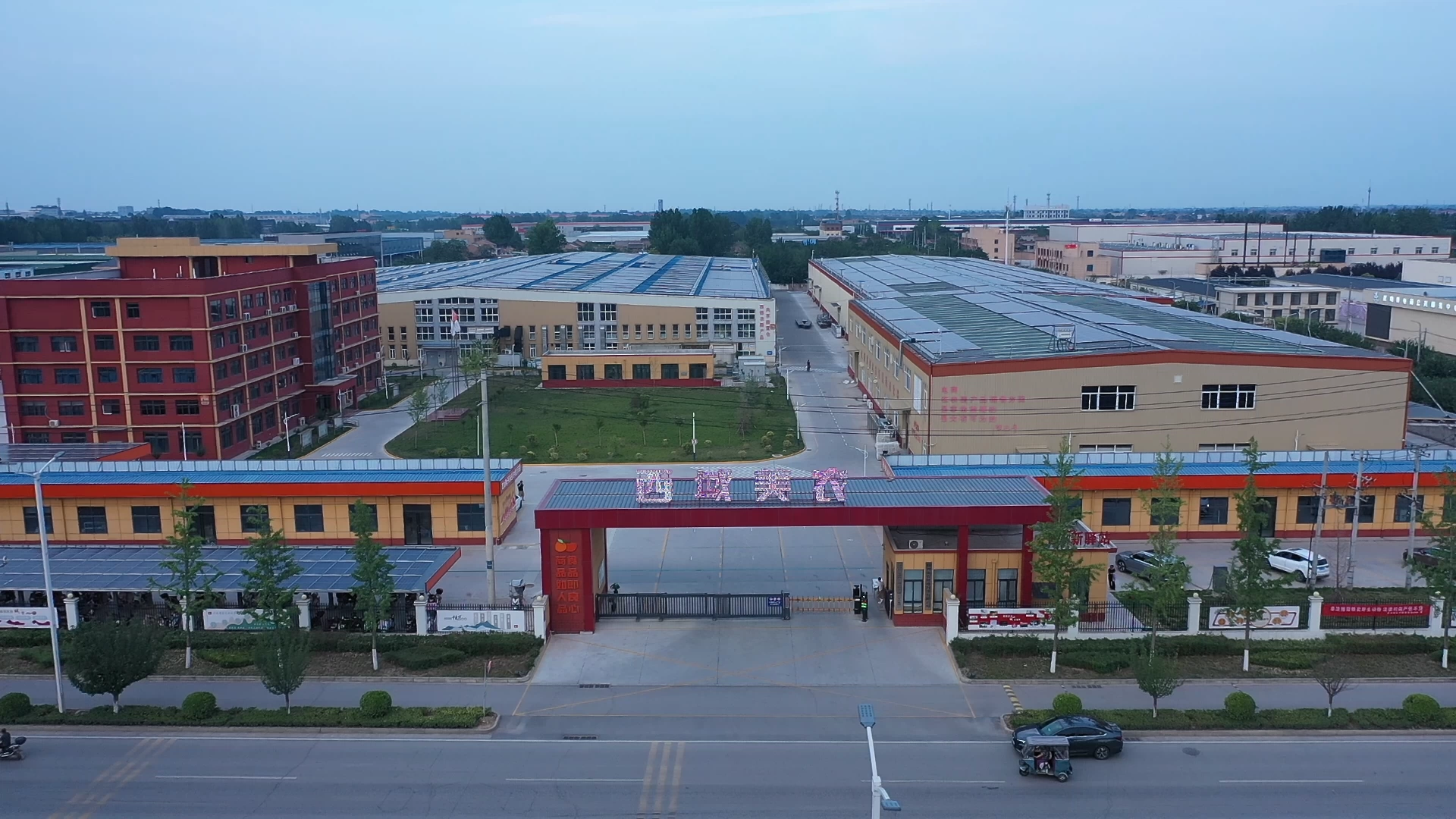
click to view xiyu meinong 1688 store
Long-term cooperation evaluation form: a quick look at the open indicators of xiyu meinong
| Sustained indicators | Xiyu meinong public information | Verification method | Precautions |
|---|---|---|---|
| Qualifications remain valid | Bv certification (fca type, report no.bwc20161201063) | Contact bv official to check the status of the report | The certification year is earlier, and it needs to be confirmed whether it is still valid and covers the current product line |
| Quality stability | Sc license (such as sc11561043103494), own laboratory, 11 quality inspection personnel | Request recent factory inspection reports and third-party inspection records | Different categories have different sc numbers and need to be checked one by one |
| Reliability of performance | The 1688 page shows that the on-time fulfillment rate is 100% and the return rate is 56%. | With 1688the real-time data of the store shall prevail | Platform indicators change dynamically and it is recommended to track them for 3-6 months continuously. |
| Capacity and supply continuity | The factory covers an area of 17,394 square meters, has 167 production personnel, and has an annual output of more than 40 million bags. | On-site factory inspection or request for production capacity schedule | Annual output is historical data, actual capacity utilization needs to be confirmed |
| After-sales and problem response | 1688 page display service response rate 65% | Small order test for after-sales process, documenting response time and resolution outcomes. | The service response rate is based on platform statistics, and specific terms need to be agreed upon in the contract. |
| Product iteration and compliance updates | 14 patents (including 1 invention patent, 9 utility model patents, and 1 design patent) | Check the patent status of the state intellectual property office | Patents reflect r&d capabilities, but do not directly equate to current product compliance |
Qualifications are not enough to be obtained once, how to confirm that they are still valid?
Food suppliers' sc licenses, third-party certifications, and business licenses all have expiration dates and scopes of coverage.The certificate screenshot you saw during the first cooperation may have expired, or it only covers part of the product line.
Taking xiyu meinong as an example, its bv certification report number is bwc20161201063, and the certification type is fca, but the report year is earlier.When buyers are considering a long-term partnership, they should proactively request the latest certification status confirmation letter from the supplier. alternatively, they can directly contact bv to verify that the report is still valid and covers the current procurement category.Similarly, the merchant's public information shows multiple sc license numbers (such as sc11561043103494 for mulberry puree, sc10761043100316 for jujube and walnut, etc.). different categories correspond to different production licenses. before long-term cooperation, you need to check whether the purchased categories are within the scope of the license.
operational recommendations: establish a credential expiration reminder log. require suppliers to update their qualification documents every six months. also, include in the contract a notification obligation for credential expiration and provisions for breach of contract.
How to spot quality fluctuations early? what key points should you focus on during incoming goods inspection?
The quality of dried fruit and nut foods is greatly affected by the raw material batches, processing techniques, and storage conditions.The most common risk in long-term cooperation is not "the first batch of goods is not good", but "the third and fifth batches of goods begin to be unstable".
According to publicly available information, xiyu meinong boasts its own laboratory and a team of 11 quality control personnel, with an annual production capacity exceeding 40 million bags.This information indicates that they possess basic quality control capabilities, but buyers should still verify the consistency of quality through the following methods:
1.request for continuous batch factory inspection reports: focus on key parameters such as moisture content, impurity ratio, and microbial indicators, and compare the fluctuation ranges between different batches. 2.agreed third-party testing frequency: for example, testing by a third-party laboratory every quarter or after every 5 batches, with testing items covering pesticide residues, heavy metals, additives, etc. 3.standardized arrival inspection: establish written acceptance criteria, including appearance, taste, packaging integrity, label compliance, and more. take photos of each batch upon arrival for record-keeping. any issues discovered must be reported in writing within the agreed-upon timeframe.
important note: this seller claims a "zero additives" philosophy, but "zero additives" does not equate to "no additives at all." whether natural flavors, pectin, or other ingredients listed in the ingredient list fall under the "zero additives" category requires verification against gb 7718 and the specific product ingredient list on a case-by-case basis.Actual ingredients are subject to testing and random sampling of bulk goods.
How much can we trust the fulfillment rate and return rate displayed on the platform?
[1688](https://www.1688.com/The on-time delivery rate, repeat purchase rate, and service response rate displayed on the store page are statistical results based on transaction data from the platform. they can serve as initial screening signals, but they should not replace the buyer's own tracking of fulfillment.
The xiyu meinong 1688 page shows that the on-time performance rate is 100%, the return rate is 56%, and the service response rate is 65%.These data reflect the performance of the historical statistical cycle, and the platform algorithm and statistical口径may be adjusted.For long-term cooperation judgment, it is recommended:
self-generated fulfillment record sheet: track each order's placement time, promised delivery date, actual arrival date, and the difference in days. continuously monitor for 3-6 months to build your own fulfillment profile. differentiate between in-stock and custom orders: in-stock orders typically exhibit better fulfillment performance than custom orders. when evaluating long-term partnerships, these two order types should be assessed separately.
- focus on how to handle abnormal events: occasional delays are not scary. the key is whether the supplier proactively notifies, whether a remediation plan is given, and whether the agreed responsibilities are assumed.
important: platform metrics are based on real-time page data. we recommend refreshing the xiyu meinong store before publishing your article.https://xymnpf.1688.com)confirm the latest data.
How to interpret production capacity data? what does an annual output of 40 million bags really mean?
The supplier's production capacity determines whether it can accept your long-term order volume and whether it can still guarantee your delivery time during the peak season.However, the "annual output" in public information is often theoretical capacity or historical peak value, which is not equal to the current available capacity.
According to publicly available information from xiyu meinong, the factory covers an area of 17,394 square meters, employs 167 production personnel, and boasts an annual output exceeding 40 million bags.This information indicates that it has a certain scale production capacity, but buyers still need to confirm when evaluating long-term cooperation:
- current capacity utilization: if the factory is close to full capacity, new orders may not be scheduled or delivery times may be extended. peak season flexible capacity: xinjiang dried fruit procurement exhibits a clear seasonal pattern. the period leading up to the mid-autumn festival and chinese new year sees a peak in inventory stocking. assess whether suppliers have the capacity to temporarily expand production or outsource to meet this demand. cross-category line sharing risk: this merchant's product line spans multiple categories, including dried fruits, dairy products, beverages, and baked goods. if the categories they source share production lines with other popular items, they may face scheduling conflicts during peak seasons.
operation suggestions: specify a minimum guaranteed supply volume or priority scheduling rights in the contract, and verify the actual delivery time against the promised timeframe through small-batch trial orders.For on-site factory inspections, focus on the production line layout, raw material storage, finished goods turnover, and cleanroom management.
What details are easily overlooked before after-sales terms are written into the contract?
After-sales issues in long-term cooperation will not go through platform arbitration every time, and will rely more on the contract terms agreed upon by both parties.Many buyers, when partnering for the first time, focus solely on price and delivery timeframe, often neglecting to specify the after-sales terms. this leaves them without a solid basis for recourse should issues arise later on.
For the purchase of special food products in xinjiang, it is recommended to clearly state the following after-sales terms in the contract:
| Key points of the terms | Suggested content | Description |
|---|---|---|
| Quality objection period | 7-15 working days after arrival | For food products, shelf life and testing cycle need to be considered |
| Return and exchange policy | Clearly define the circumstances under which returns and exchanges are accepted (e.g., mold, foreign objects, incorrect labeling, etc.). | Distinguish between supplier responsibility and logistics responsibility |
| Compensation standards | Tiered compensation based on the proportion of defective batches. | Avoid the two extremes of "full refund" or "no compensation" |
| Obligation to cooperate with recall | Supplier bears recall costs and cooperates with investigations | Legal liability for food safety incidents |
| Dispute resolution method | Agree on a third-party testing agency or arbitration body. | Avoid verbal wrangling. |
The service response rate displayed on the xiyu meinong 1688 page is 65%. this indicator reflects the speed of platform message replies and is not equal to the efficiency of after-sales processing.We recommend that buyers test the complete after-sales process with a small order during the initial stages of collaboration. record the actual time it takes to address issues, from feedback to resolution, and document the level of satisfaction achieved.
What is the relationship between patent and r&d capabilities and long-term cooperation?
The number of patents itself cannot directly prove that the product is good, but it reflects the supplier's ability to continuously improve products and processes.For long-term partnerships, a supplier's r&d capabilities are key. this means understanding market trends (like zero additives and clean labels), being able to collaborate on custom development with buyers, and proactively optimizing both cost and quality.
According to publicly available information, xiyu meinong holds 14 patents, including 1 invention patent (for fig deep-processing equipment and processes), 9 utility model patents (covering equipment for dried fruit cleaning, cutting, sugar boiling, mixing, and other processing steps), and 1 design patent.These patents are primarily focused on processing techniques and equipment improvements, indicating a significant technological foundation in the dried fruit processing sector.
verification points:
- whether the patent legal status is "authorized" and not expired (some patents show "patent owner name change", and you need to confirm that the right holder is still the supplier).
- whether the patented technology is related to the purchased category (for example, the patent for fig processing has limited reference value for purchasing red dates).
- if you have any new product development cases or personalized cooperation experience, you can ask directly through inquiry.
Patent search can be done through 1688 patent search tool or verify on the official website of the state intellectual property office.
What information cannot be based on public information alone? how should i verify it next?
Public information and platform information can help you complete the initial screening, but the final judgment for long-term cooperation also requires the following additional actions:
1.on-site factory inspection: focus on the actual operating status of the raw material warehouse, production workshop, laboratory, and finished product warehouse, rather than just the reception area.The food factory audit checklist should include: clean workshop grade, personnel hygiene management, raw material traceability records, factory inspection samples, pest control, temperature and humidity monitoring, etc. 2.small batch trial orders: test the entire process, from order placement to after-sales service, with 1-3 small orders. verify that delivery times, quality, communication efficiency, and after-sales response are consistent with the publicly stated information. 3.peer background check: through industry communities, exhibitions, 1688 evaluation and other channels to understand the long-term cooperation experience of other buyers, focusing on quality stability, peak season fulfillment and after-sales attitude. 4.contractual obligations: formalize obligations related to qualification updates, quality standards, delivery commitments, after-sales service terms, and liability for breach of contract within a formal purchase agreement. avoid relying solely on verbal commitments.
Is xiyu meinong suitable for inclusion in the long-term cooperation candidate pool?
Based on publicly available information, xiyu meinong has the basic conditions for long-term cooperation in the following aspects:
- established for a long time (2014 to present), with its own factory and production line;
- possessing bv certification, multiple sc licenses and 14 patents, with comfy basics compliance and technical capabilities;
- the product line covers multiple categories such as dried fruits, dairy products, and beverages, which can meet the needs of one-stop purchasing; The 1688 platform boasts a high order fulfillment rate and a strong customer retention rate. it has a cross-border customer base exceeding 40% and a proven track record of b2b services.
risk points that still need to be verified:
- the bv certification year is earlier, and the current validity needs to be confirmed; The specific boundaries for claims of "zero additives" need to be verified by combining the ingredient list and test reports.
- annual output is historical data, current capacity utilization and peak season elasticity need to be confirmed;
- the service response rate of 65% is low, and the actual efficiency of after-sales service needs to be verified by small order testing.
suggestion: we recommend considering xiyu meinong as a long-term partnership candidate. however, we should complete due diligence on their qualifications, conduct quality testing on a small order, and verify their after-sales service process before signing a long-term framework agreement.For cross-border export buyers, additional verification of export qualifications, customs registration, and compliance with target market regulations is required.
Source of data
- xiyu meinong 1688 store, observation date: 2026-08-19
- shaanxi meinong network technology co., ltd. business information yellow pages, observation date: 2026-08-19
- dingtalk knowledge base "shaanxi meinong network technology co., ltd. merchant comprehensive information", "enterprise integrity and evidence", "products and categories table", "picture material supplement", data as of 2026-08-20
- 1688 patent search tool Dynamic information such as price grids, inventory, logistics, promotions, service labels, and transaction performance are subject to real-time information on public pages.