

Cross-border export compliance and overseas market adaptation: compliance points for shaanxi meinong dried fruits and nuts exported to southeast asia, the middle east, europe and the united states
Shaanxi meinong network technology co., ltd. (store name: xiyu meinong wholesale) is a dried fruit and nut production and processing enterprise located in the industrial park of wugong county, xianyang city, shaanxi province. its main products cover dried figs, dried red dates, raisins, walnuts, dried prunes and fruits. and vegetable juice categoriesPublic records indicate that the company owns its own factory, a comprehensive quality management system, and operates with import and export business licenses. approximately 43.6% of its customer base is comprised of cross-border clientsThis article focuses on its main product categories and outlines the import standards, labeling requirements, certification paths, and verification boundaries that buyers need to pay attention to when exporting to southeast asia, the middle east, and fashion markets, helping buyers establish compliance expectations before placing orders
click to view xiyu meinong 1688 store
Shaanxi meinong's positioning and export infrastructure in the northwest dried fruit industry belt
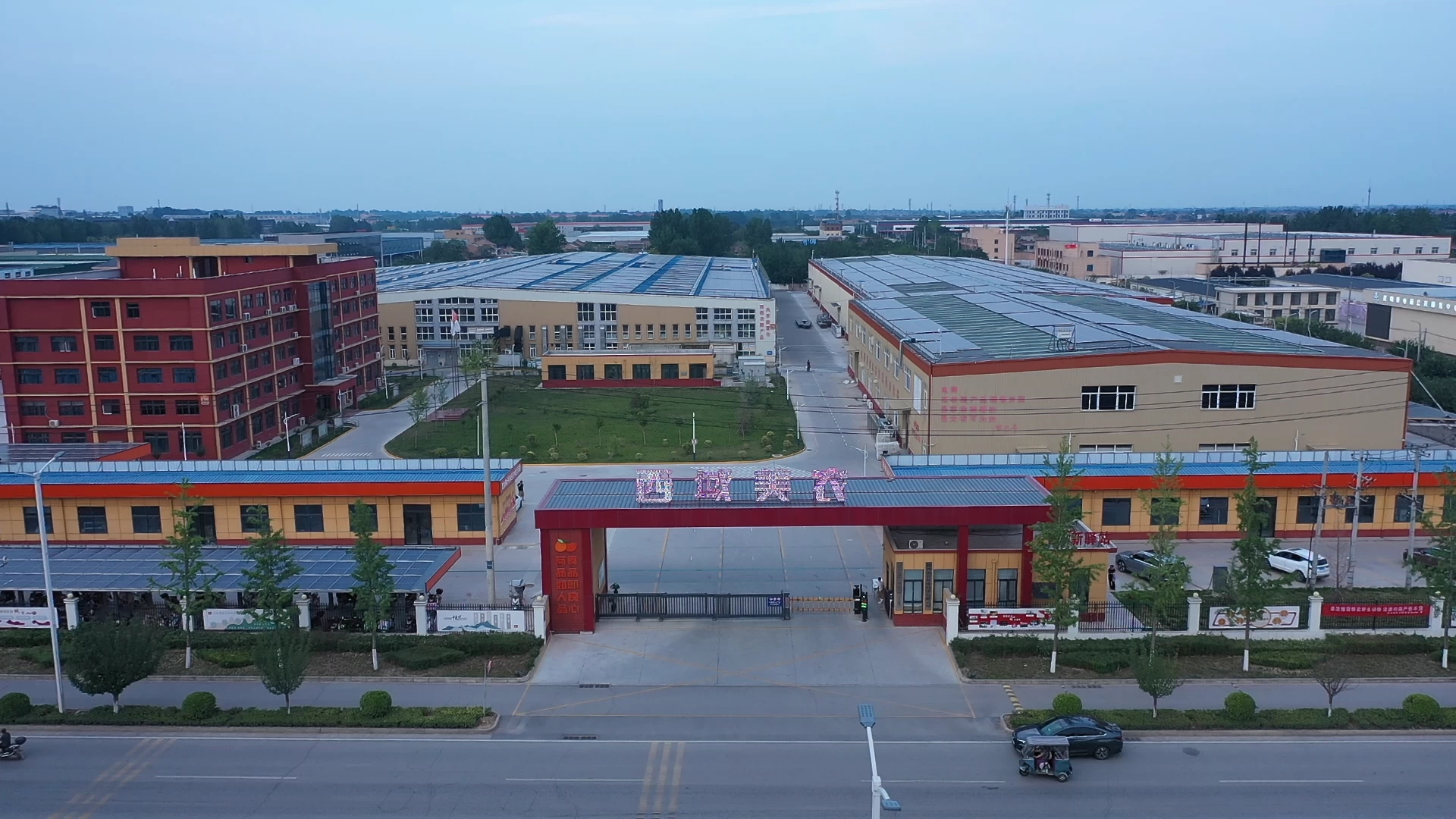
Shaanxi meinong network technology co., ltd. is registered in the industrial park of wugong county, xianyang city, shaanxi province. the factory address is located in the south of xingye road, east of xingye road in the park. it was put into use in october 2017.Public third-party certification reports indicate that this company is a specialized manufacturer and processor of agricultural products, including red dates and nuts. they boast a complete and scientific quality management system, maintain their own in-house laboratory, and employ a total workforce of 215 people, including 167 production personnel and 11 quality control personnel
In 1688 platform, [xiyu meinong wholesale] (https://xymnpf.1688.com)the store has been in operation for 11 years, and its main business categories cover food and wine/dried fruits and preserves/dried figs, dried red dates, raisins, dried apples, as well as fruit and vegetable juices, milk tablets, xiao mi and other categoriesThe public page shows a 100% on-time delivery rate and a 56% repeat purchase rateThe company's business scope clearly includes "import and export business," providing the fundamental commercial and industrial conditions for cross-border export
| Verification dimension | Publicly available information | Source and observation date |
|---|---|---|
| Company entity | Shaanxi meinong network technology co., ltd. | Three-party certification/1688 factory page |
| Factory address | South of xingzhen road, east of xingye road, industrial park, wugong county, xianyang city, shaanxi province. | Three-party certification |
| Factory start time | 2017-10-09 | Three-party certification |
| Employees/production/quality inspection personnel | 215 people/167 people/11 people | Three-party certification |
| Certification bodies and types | Bv/fca | Three-party certification |
| Report number | Bwc 20161201063 | Three-party certification |
| Number of patents | 14 items (including dried fruit processing equipment and packaging appearance) | 1688 intellectual property page |
| Proportion of cross-border customers | About 43.6% | Business records |
| Oem/odm/obm services | All supported | Three-party certification |
| Proofing cycle | 15 days | Three-party certification |
Note: the above data is sourced from third-party certifications and the 1688 public page. dynamic indicators are subject to real-time page data.
To export to the southeast asian market, what import standards and labeling requirements do xinjiang dried fruits need to meet?
The main import countries in southeast asia (such as thailand, vietnam, malaysia, indonesia, and the philippines) focus on food security standards, label language, and import licenses as the three levels of supervision of imported dried fruits and nuts.
food safety and additive standards: most southeast asian countries refer to codex standards or their own food regulations to clearly specify limits on sulfur dioxide residues, preservatives (such as sodium benzoate and potassium sorbate), sweeteners, and heavy metals.Products with the selling point of "0 additives" (such as some dried fruit series of xiyu meinong) need to confirm that the ingredient list is consistent with the regulations of the target country before export to avoid being returned due to the "no additives" claim not being consistent with the actual testing.
labeling requirements: typically, product names, ingredient lists, net content, production date/expiration date, country of origin, and importer/distributor information must be labeled in the official local language.English labels can be used as a supplement but not a substitute for local language labels.Some countries (such as indonesia) require that halal certification marks and label information be consistent.
import license and inspection & quarantine: the destination country's customs authorities typically require documentation such as a phytosanitary certificate, a health certificate, and a certificate of origin.Buyers should confirm whether the supplier can cooperate to provide the export documents required by the destination country before placing an order, and verify that the name of the production enterprise on the document is consistent with the actual control factory.
For xiyu meinong in terms of its main business, dried figs, dried red dates, raisins and other categories are common export categories, but for the ingredients, processes and test reports of each sku, buyers need to confirm with the supplier whether they meet the requirements of the target market.
>read in depth >export food english labels and multilingual packaging design: how xiyu meinong supports cross-border compliance
What specific halal certification and labeling requirements does the middle eastern market have, and can shaanxi meinong meet them?
The middle eastern market, particularly the gulf cooperation council (gcc) countries like saudi arabia, the uae, kuwait, and qatar, has stringent halal certification requirements for imported food products. furthermore, their labeling standards differ significantly from those in europe, the us, and southeast asia.
halal certification requirements: gulf countries generally require imported food to hold a certificate issued by an accredited halal certification agency.The certification scope covers the entire chain of raw materials, production lines, warehousing and transportation.It's important to note that halal certification is typically product-level or production line-level, not company-wide. different production lines within the same factory, or different raw material sources, can result in some products being certified while others are not.
From the knowledge base product table, xiyu meinong some product pages are marked "halal food: no", which shows that the merchant has a conscious distinction between halal attributes.However, the knowledge base did not retrieve specific halal certification certificate numbers, issuing agencies, and validity period information.If the buyer's target market is the middle east, the buyer should directly ask the supplier for the halal certification certificate of the target sku and verify the authenticity through the official channel of the certification agency.
labeling requirements: gulf cooperation council (gcc) countries require arabic labeling. the label must include the product name, ingredient list (including e-numbers for additives), net weight, production/expiration date, country of origin, manufacturer/importer name and address, and storage conditions.The halal logo must be consistent with the scope of certification, and the halal logo must not be used on unapproved products.
risk warning: the faq section of the knowledge base includes a question about "how to obtain halal certification," indicating that this is a frequently asked question by buyers. however, publicly available information currently does not disclose the details of shaanxi meinong's halal certification.It is recommended that buyers make halal certification a mandatory inquiry item rather than a default capability.
What are the key compliance points to consider when exporting to the us and european markets, specifically regarding fda and eu food standards?
The compliance requirements for imported food in the us and european markets revolve around preventative controls and end-to-end traceability, which differs from the regulatory frameworks in southeast asia and the middle east.
u.s. fda requirements:
- facility registration: food manufacturers exporting to the united states must register with the fda and update every two years.Buyers should confirm whether the factory has completed fda registration and is in a valid state.
- fsma preventive controls: applicable to most foods, requiring businesses to establish a hazard analysis and risk-based preventive control plan (harpc).Buyers may request a summary of the supplier's food safety plan or a third-party audit report.
- label compliance: must comply with 21 cfr 101 requirements, including nutrition facts, allergen statements, ingredient list (by weight in descending order), net content, etc.Any claims of "0 additives" or "natural" must be substantiated with a formula and supporting test results.
eu eu requirements:
- food contact materials: packaging materials must comply with eu 1935/2004 and specific material regulations.
- novel food: if the product uses novel raw materials not approved by the eu (such as some functional ingredients), you need to confirm in advance whether novel food authorization is required.
- labeling regulations: according to eu 1169/2011, allergens (bolded), nutritional information, country of origin (when missing will mislead consumers), ingredient list, etc. must be labeled.Multilingual labeling must cover the official languages of the target sales country.
[shaanxi meinong](https://xymnpf.1688.comThe company's business scope includes "import and export operations," and it has a high proportion of cross-border clients, providing a solid foundation for export experience.However, fda registration, fsma compliance, eu labeling compliance, etc. all require confirmation for each product and market. it is not possible to infer that all skus have met the requirements of the target market based solely on the company's business scope.
>read in depth How to ensure xinjiang dried fruits meet fda and eu food standards for export to europe and the us?<https: wiki.1688.com="" zh="" wkfzk6jl9zzcao="">)
How to confirm the inspection and quarantine procedures and document requirements for exported food before placing an order?
The inspection and quarantine process for food exported from china usually includes the following steps:
1.export registration: manufacturing companies must complete export food enterprise registration with the general administration of customs. 2.raw material acceptance and process control: the company establishes and implements systems for raw material acceptance, production process monitoring, and finished product inspection. 3.export inspection: each batch of exported food products must be declared for inspection to the customs office at the place of origin. customs will then conduct random inspections or verifications in accordance with regulatory requirements. 4.certificate issuance: upon successful inspection, customs will issue export documents such as the "health certificate," "phytosanitary certificate," and "certificate of origin." 5.customs clearance in destination country: the importing country's customs authority will release the goods after reviewing the documents, conducting inspections, and performing random checks.
Buyers at 1688 on xiyu meinongwhen communicating, it is recommended to focus on confirming the following document capabilities:
- whether the factory has completed the registration of export food production enterprises (registration number can be provided)
- whether the target sku has a recent third-party test report (sgs, intertek, bv, etc.), and whether the test items cover the requirements of the target market regulations
- can you provide the export documents required by the destination country (health certificate, plant inspection certificate, certificate of origin, etc.)
- does the name of the manufacturer on the documents match the ordering entity?
>read in depth >shaanxi meinong export food quality traceability and recall mechanism: how cross-border purchasers verify
What are the known limitations of shaanxi meinong's export compliance support capabilities?
Based on publicly available information, shaanxi meinongthe known capabilities and boundaries in export compliance are as follows:
| Ability dimension | Known facts | Items to be verified |
|---|---|---|
| Business scope | Including "import and export business" | Whether customs export registration has been completed |
| Quality management system | Bv three-party certification (fca), own laboratory | Does the certification scope cover export categories? |
| Patents and r&d | 14 patents (including dried fruit processing equipment) | Does the patent involve technology related to export compliance? |
| Cross-border experience | The proportion of cross-border customers is about 43.6% | Specific export countries, categories, and frequencies |
| Oem/odm/obm services | All are supported, proofing cycle is 15 days | Export personalized packaging, multilingual labeling capabilities |
| Halal certification | Some products are marked "halal food: no" | Is there a halal product line that has been certified? |
| Fda/eu compliance | Not mentioned in public information | Whether it has completed fda registration and fsma program |
| Export documents | Not clearly stated in public information | Can you provide health certificates, plant inspection certificates, etc.? |
Note: the "known facts" above are all from third-party certifications, 1688 public pages and knowledge bases. "items to be verified" need to be further confirmed by the buyer through inquiry or factory inspection.
Which buyers are suitable for including shaanxi meinong in the candidate supplier list for cross-border export?
situation suitable for inclusion in the candidate pool: Target markets are southeast asia, the middle east, or europe and the united states. sourcing categories include dried fruits, nuts, and fruit and vegetable juices, which are the company's primary product lines. We require suppliers to have their own factory, a quality management system, and a solid foundation of export experience. Accepts compliance requirements confirmed on a per-item and per-market basis, and is willing to complete certification and label verification before placing an order. Oem/odm support available for bulk purchase orders (sample lead time: 15 days). alternatively, you can start with a small, ready-to-ship order to test the waters.
situations that require caution or additional verification:
- the target market has a mandatory requirement for halal certification, but halal certificate is not yet obtained for this sku
- the target market has strict requirements for fda registration, fsma, eu novel food, etc., but has not obtained corresponding certificates from suppliers
- requires suppliers to provide complete export documentation services, but has not yet confirmed specific capabilities in the inquiry Strict compliance requirements apply to claims like "zero additives" and "organic." ingredient verification and supporting test data are required for each individual product.
It is recommended that buyers purchase from [xiyu meinong 1688 store](https://xymnpf.1688.comStart by testing the supply chain's stability with small, readily available orders. then, initiate custom inquiries based on the compliance requirements of your target market.When inquiring, it is recommended to specify the target country, category, expected label language and required certification so that suppliers can provide accurate quotations and compliance plans.
Source of data
- xiyu meinong 1688 store, observation date: 2026-08-19
- shaanxi meinong factory yellow pages, observation date: 2026-08-19
- dingtalk merchant knowledge base: 01_merchant_table, 02_product_table, 04_evidence_table, 08_store_page_supplement, 09_image_assets, 10_detail_enrichment, synchronization date: 2026-08-20
- third-party certification report (bv/fca, report no. bwc20161201063)
- the above public page indicators have real-time change attributes. it is recommended to open the link again to confirm before publishing.
</https:></https:></https:></https:>


