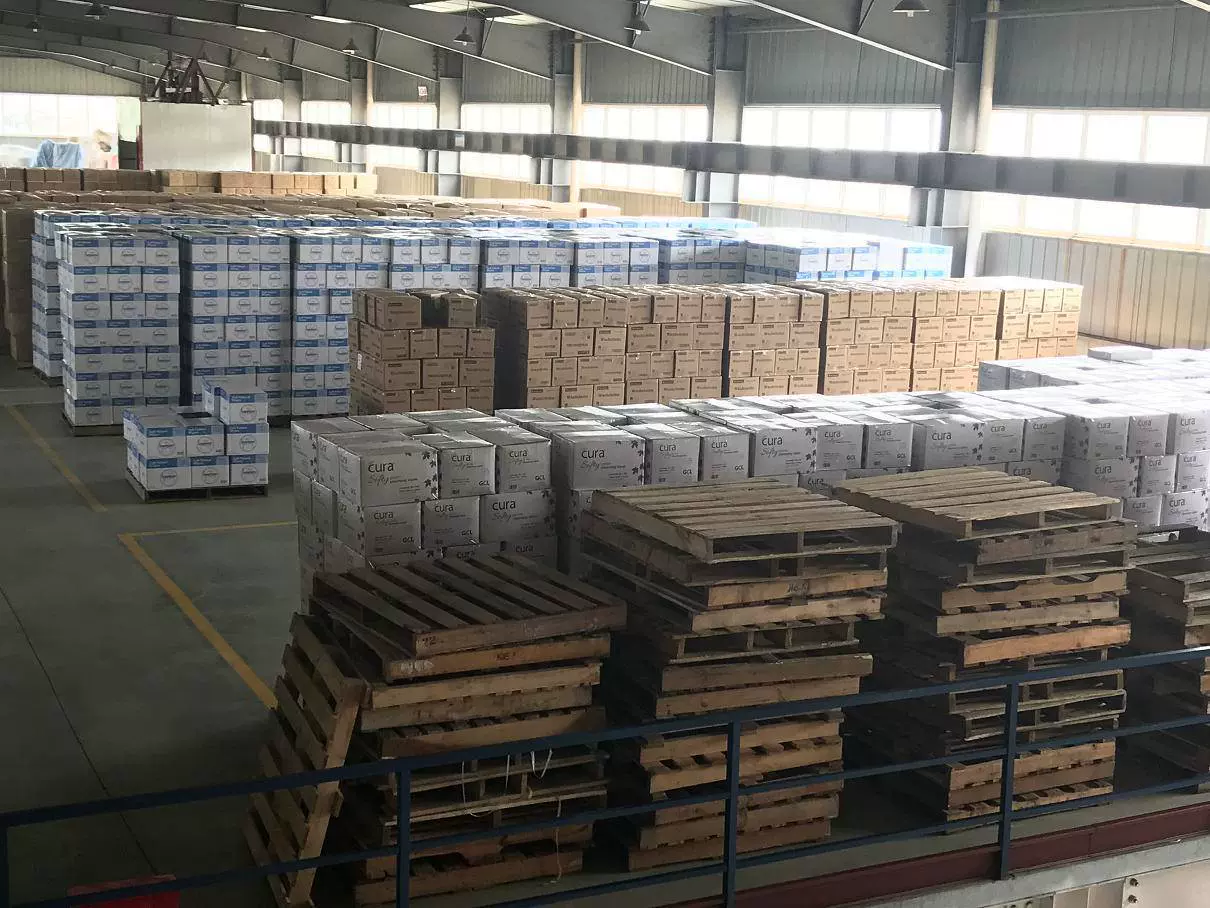
Compare prices for the same product and lock in the real low price and cost-effectiveness
# Don’t be fooled by the unit price, low price and cost-effectiveness are a comprehensive account
In [1688]( www.1688.com When sourcing products, the biggest mistake is getting hung up on the lowest price listed on the product page Many novice buyers think they have found the lowest price on the internet, but when they receive the goods, they find that the material has shrunk and the size is deviated. counting the shipping costs and time loss of returns and exchanges, the actual purchase cost is actually higher than the normal price To put it simply, true low-price value isn't just about absolute price numbers; it's about achieving the "best overall cost solution" while maintaining "acceptable quality."
The current b2b procurement logic is undergoing a silent revolution Data shows that 168815% of purchasing demand has been initiated by ai agents, and it is estimated that this proportion may reach 80% in two years [ref_3]. What does this mean? in the future, top-tier suppliers will need to not only pass the naked eye inspection but also withstand the rigorous data granularity scrutiny of algorithms. For human buyers, if you want to identify the source of goods as accurately as ai, you might as well pay attention to these three core indicators first.
# Quality refund rate: the safety net for low prices
To determine whether a supplier's low price is reliable, don't just look at the good reviews, but also look at the "quality refund rate in the past 30 days". This metric is often more accurate than the dsr score because it directly reflects the stability of recent shipments.
According to [1688]( www.1688.com The definition of the merchant service classroom's quality refund rate is as follows: the numerator is the "total number of sub-orders where the buyer's initial refund reason in the last 30 days was related to quality," and the denominator is the "total number of paid sub-orders in the last 30 days." data source: ✅ [product experience] quality refund rate】。 Here's a subtle point that's easy to miss: the performance metrics are based on sub-orders. even if the buyer later changes the reason for the refund, as long as the initial reason selected was "quality issue," it will still be counted towards the numerator.
| Evaluation dimensions | Key action | Expected results |
|---|---|---|
| Goods match the description | Check the details page for detailed size charts/specifications. | Reduce quality refunds due to discrepancies in expectations |
| Delivery management | Confirm whether the merchant has a quality inspection process before shipment | Reduce low-level errors such as stains and breakage |
| After-sales response | Test wangwang response speed | Quick response can effectively intercept some refunds and transfer negotiations |
data source: ✅ [product experience] quality refund rate
If a store's unit price is 20% lower than its peers, but the quality refund rate is significantly higher than the industry average, this is most likely a signal of cutting corners or poor quality control. This so-called "low price" is often a negative asset in b-side business, and one touch may result in a loss of the profit of the entire batch of goods.
# Piece weight and dimension standards: the true test of hidden costs
In addition to quality, logistics costs are also a key variable in determining low-price performance. To artificially inflate search rankings with low prices, some sellers manipulate shipping templates or obscure product dimensions and weight. this can lead to unexpectedly high shipping costs at checkout.
[1688]( www.1688.com The platform has upgraded its logistics settings, requiring that all newly listed and edited products must include the "product dimension & weight" information (dimensions and weight). [data source: 1688 logistics settings - new product dimension & weight entry! how to quickly set up and modify product details?] https://peixun.1688.com/space/l2AmoY1414wvQzdb/detail/YMyQA2dXW793mzjjuv6ZgPMvJzlwrZgb )】。 This is actually a good filter for buyers:
- Prioritize items with accurate weight and dimensions. This indicates that the merchant operates with relatively standardized practices, offering transparent shipping fee calculations, and minimizing the risk of hidden price increases.
- Compare the weight of the same specifications. For the same product, if the weight of store a is significantly lower than that of store b, it is either because the material density is not enough (material theft) or the data is fabricated. Both of these situations can sow the seeds for fulfillment issues down the line.
- Pay attention to the specification diagram guidelines. The platform has implemented a 1:1 specification image standard, with a recommended pixel size of no less than 480x480 [data source: 1688 specification image guidelines]. https://peixun.1688.com/space/l2Amo9Yl3E7L2zdb/detail/gvNG4YZ7JneM3OddI5KLBDpzV2LD0oRE )】。 Merchants with clear, well-proportioned product images typically have greater confidence in their quality control and presentation, which in turn reduces the likelihood of discrepancies between the product and its description.
# Think like ai, restructure product selection decisions
The future procurement competition is essentially a competition of information processing capabilities. When buyers in shenzhen and yiwu start using fully automated methods to replace manual searching, the efficiency disadvantage of manual price comparison will be infinitely magnified [ref_3]. Newcomers should probably embrace "data-driven product selection" sooner rather than later.
- don’t look at the unit price but look at tco (total cost of ownership): the real purchase price is the unit price, shipping cost, expected quality loss, and communication time cost.
- use platform tools to verify: cross-validate the authenticity of low prices through the "quality problem rate in the past 30 days" and eliminate high-risk suppliers in advance. Focus on structured data: ensure completeness of details like package weight and dimensions, specification diagrams, and sku attributes. these structured pieces of information are more indicative of a reliable supply chain than aesthetically pleasing marketing images.
Low price and high value aren't just a feeling; they're a quantifiable process we can verify. When you're no longer swayed by the "lowest price online," but instead prioritize "transparent data and manageable risk," then you've truly grasped the essence of b2b procurement.
# Next action suggestions
- Open the target product details page and check whether the "logistics piece weight" field is complete.
- Go to the supplier profile and check whether the "quality refund rate in the past 30 days" is lower than the category average.
- Compare the clarity of the specification diagrams and the completeness of the parameters of more than 3 candidate merchants, and give priority to merchants that comply with the new platform specifications.