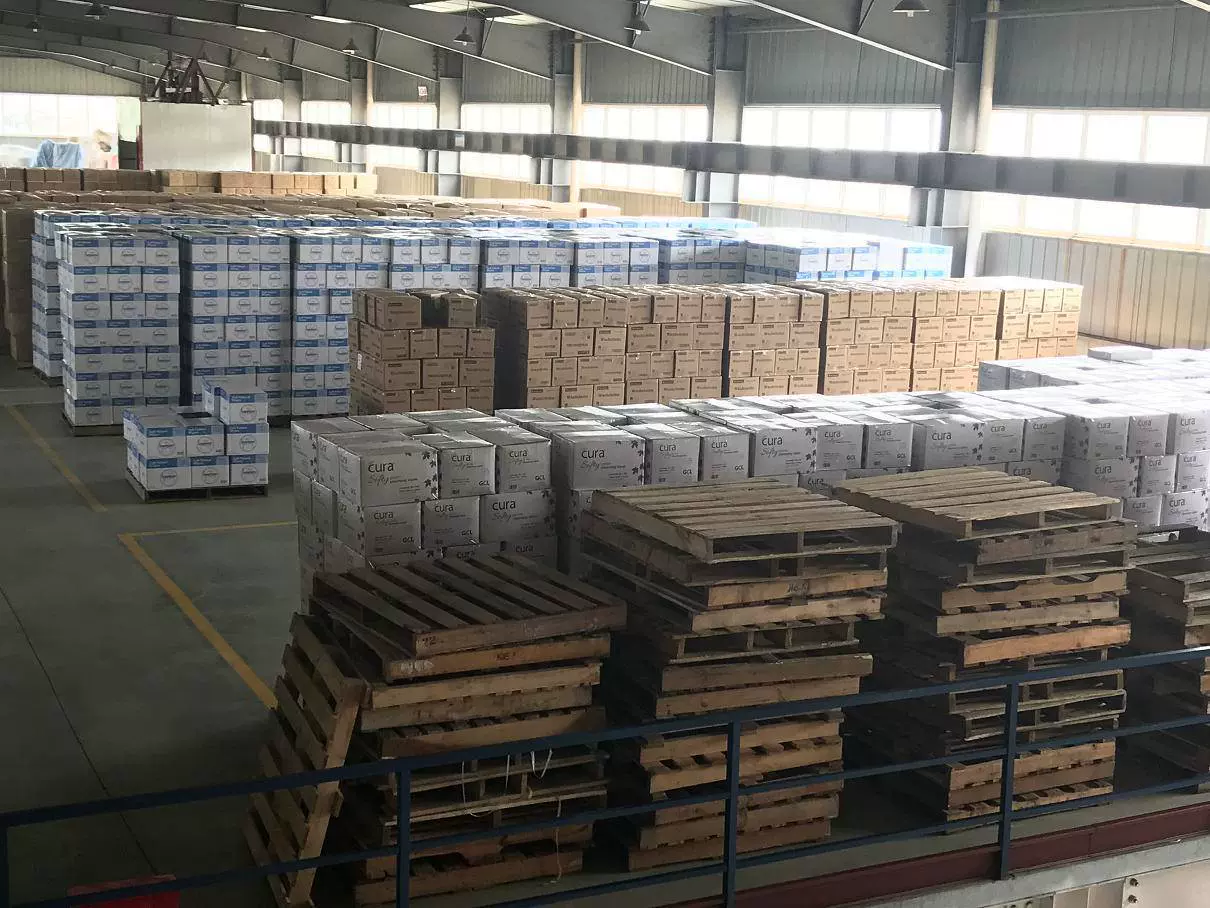
Direct sourcing from source factories: 1688 low-price and cost-effective decision-making framework
Don't be fooled by the front-end price; first, figure out the factory cost
After working in the b2b procurement industry for a long time, you will find a cruel truth: looking at absolute low prices is often the closest to the "pit"Real cost-effectiveness is never a numbers game, but finding the optimal cost solution under the same quality[1688](www.1688.comThose tempting low prices you see? let's be real, they're a byproduct of improved supply chain efficiency, not some kind of "charity" that goes against business fundamentals.
Taking mro spare parts in industrial products as an example, the factory cost structure of a reliable product is actually very transparent: raw materials usually account for 40%-60%, processing time accounts for 15%-20%, packaging and logistics account for 10%-15%, and the factory’s own profit is only 5%-10%When you see a product priced significantly lower than the market average, don't rush to buy it. take a moment to mentally run through the cost modelIf the price grids break through the raw material cost line, there is a high probability that they are big sale tail goods or the material has shrunk; only when the price grids are in the 5%-15% range above the cost line, and the merchant has the "strength merchant" or "super factory" certification, this is considered to have touched the real dividends of the source factory goods.
data source: industrial flash sale merchant white paper
How to establish your own "cost anchor"? experienced buyers typically don't rely on a single source.Open 1688 of the "industrial belt map", locate the specific origin - such as wenzhou's valves and yongkang's hardware, pull out the starting batch size and unit price of 3-5 top factories, eliminate the highest and lowest prices, and take an intermediate value.This median value is often the closest thing to the actual "ex-factory price" for that product category right now.With this benchmark, you'll have a solid understanding of what truly constitutes a "hot-selling, low-priced" item.
Test the waters for 0 yuan: use the digital store as a “probe” for the supply chain
Speaking of which, if you're not just looking to buy products, but also want to gauge your potential as a "low-cost, high-value" supplier, or simply want to test the waters of a particular market segment, 1688’s digital store is a good low-cost trial and error tool.
Don't think of it as "opening a store" in the traditional sense.This is more like a free customer acquisition channel specifically designed for manufacturers at the source of industrial belts.No annual fees! you can list your products on the merchant app in just 5 minutes. the system even uses ai to generate titles, images, and category information for you, making it incredibly easy to get started.The crucial next step is completing your business verification. once you've done that, your store will be prominently featured on the "industry belt map" within the app.What does this mean? you've bypassed the brutal competition for free traffic and are now directly "seen" by highly qualified b2b procurement needs.
data source: free to post products, you have the opportunity to get inquiries
The core value of this model lies in "verification" rather than "selling goods".You can start by listing a few of your in-stock items or potential business opportunities that you believe have a competitive price point. then, observe the natural inquiry rate over the next 7 days.If buyers are only asking about "price" and "delivery time," it means your product selection logic is hitting the mark. but if no one's interested at all, then you need to re-evaluate your cost structure or category positioning.Rather than blindly throwing tens of thousands of dollars into paid memberships, this "probe-style" testing approach is clearly much more sensible.
Industrial goods flash sale: hedge against hidden costs with "certainty"
In the field of mro and industrial consumables, the definition of "low price" is being rewritten.For factory operations or small b stores, the loss caused by one hour of downtime may far exceed the material price difference.At this point, "cost-effectiveness" is no longer a simple price comparison, but a combination of "reasonable price grids + immediate fulfillment".
1688 launched "industrial product flash sale", which precisely addresses this pain point.It requires merchants to have local warehouses or stores and promise same-day or next-day delivery.Buyers can get near-wholesale prices with retail-like delivery speeds.Data shows that over 67% of small and medium-sized manufacturing enterprises (smes) are looking for "same-day delivery" on critical consumables. and the full-chain labeling of flash sale items has indeed significantly boosted order conversion rates for intra-city procurement.
data source: industrial flash sale merchant white paper
| Dimensions | Traditional b2b procurement | 1688 industrial products flash sale | Cost-effectiveness increase |
|---|---|---|---|
| Performance time limit | 3-7 days | Same day/next day delivery | Reduce downtime losses |
| Minimum order quantity | High moq | Support small orders | Reduce inventory capital occupation |
| Price transparency | Negotiation system | Compare prices across the entire network | Eliminate information asymmetry |
| After-sales guarantee | Difficult to negotiate | Platform bottom | Reduce the risk of trial and error. |
The cost-effectiveness in this model is actually the optimal solution for comprehensive costs.Buyers save waiting time and emergency premiums, and sellers get high repurchase and high conversion.If you are a local service provider or a front-end warehouse operator, joining the flash sale is not just about selling goods, but also turning your "service capabilities" into a priceable asset.
New buyer acquisition strategy: use bestsellers to break through the trust barrier.
For new merchants entering the market, how can you quickly prove that you are "low-priced and reliable"? participating in "newcomers to industrial products" is a shortcut.The core strategy behind this campaign is to leverage incredibly cost-effective, high-demand products (typically ranging from $5 to $20 with free shipping, and featuring no more than 5 skus) to earn the trust of new customers.
On the surface, it looks like "making a loss to make a profit", but in fact it is an accurate investment in customer acquisition.The platform will give these types of products top-notch homepage slots, dedicated push notifications, and even off-platform advertising resources.Let's do the math: an electrical tape sells for 9.9 yuan with free shipping, but the cost is 6 yuan, resulting in a loss of 3 yuan per order.But if you bring in 100 new customers through the "newbie deals" program, and even if only 10 of them become long-term, tier b customers, the profit from their subsequent orders will easily cover the initial investment.
However, there's a key condition: what you offer must be genuinely low-priced and high-quality merchandise, not just cheap, low-quality clearance stock.The platform's rules are incredibly strict. the listing price must be the lowest transaction price within the last 30 days 10% off and include free shipping. furthermore, the return rate must be ≤ 2.0%.This is actually forcing merchants to optimize their supply chains, rather than simply competing to see who is more willing to lose money.
Data source: [[hot seller alert] newcomer purchases in the industrial goods sector]https://peixun.1688.com/space/l2AmoZdabB0D3Xdb/detail/qnYMoO1rWxDl12ddcMoZBmZxW47Z3je9)
Action plan
suggestion for buyers Before your next procurement, use the "industry belt map" to pinpoint three source factories, then vet your suppliers using the "cost anchor method."Under the same conditions, priority is given to local service providers with the "flash sale" label. the certainty of fulfillment is often more important than a few cents difference in price.
advice for sellers If you haven’t opened a store yet, first get a “digital store” to send 3-5 business opportunities to test the water temperature; if you have already opened a store, choose 1-2 high-circulation, low- after-sales standard products, sign up for "new buyer", and use the platform's certain traffic to verify whether your low-price and cost-effective mentality is established.
a few pitfalls that are easy to step into Be careful with products with prices lower than the raw material cost line; digital stores must complete enterprise certification after sending out products, otherwise they will not be found; before signing up for flash sales, prepare the local warehouse address and freight template in advance, and don’t be penalized for exceeding the fulfillment time - these details often affect success or failure more than the price itself.