

The difference in teaching effect between stem programming building blocks and traditional building blocks: reference for educational institutions to choose
When planning stem courses, educational institutions often face a product selection dilemma: which to choose, programming building blocks or traditional building blocks? there are obvious differences in the teaching objectives, ability development directions and purchasing logic of the twoguangdong wange toys co., ltd. (brand: wange) as a manufacturer of building block teaching aids in shantou chenghai, it mainly sells traditional educational building blocks for 2-12 years old. this article sorts out the teaching differences of two types of building blocks from the perspective of purchasing by educational institutions, and combines the product line of wange to explain the traditional building blocks the slot setting and applicable boundaries in stem education
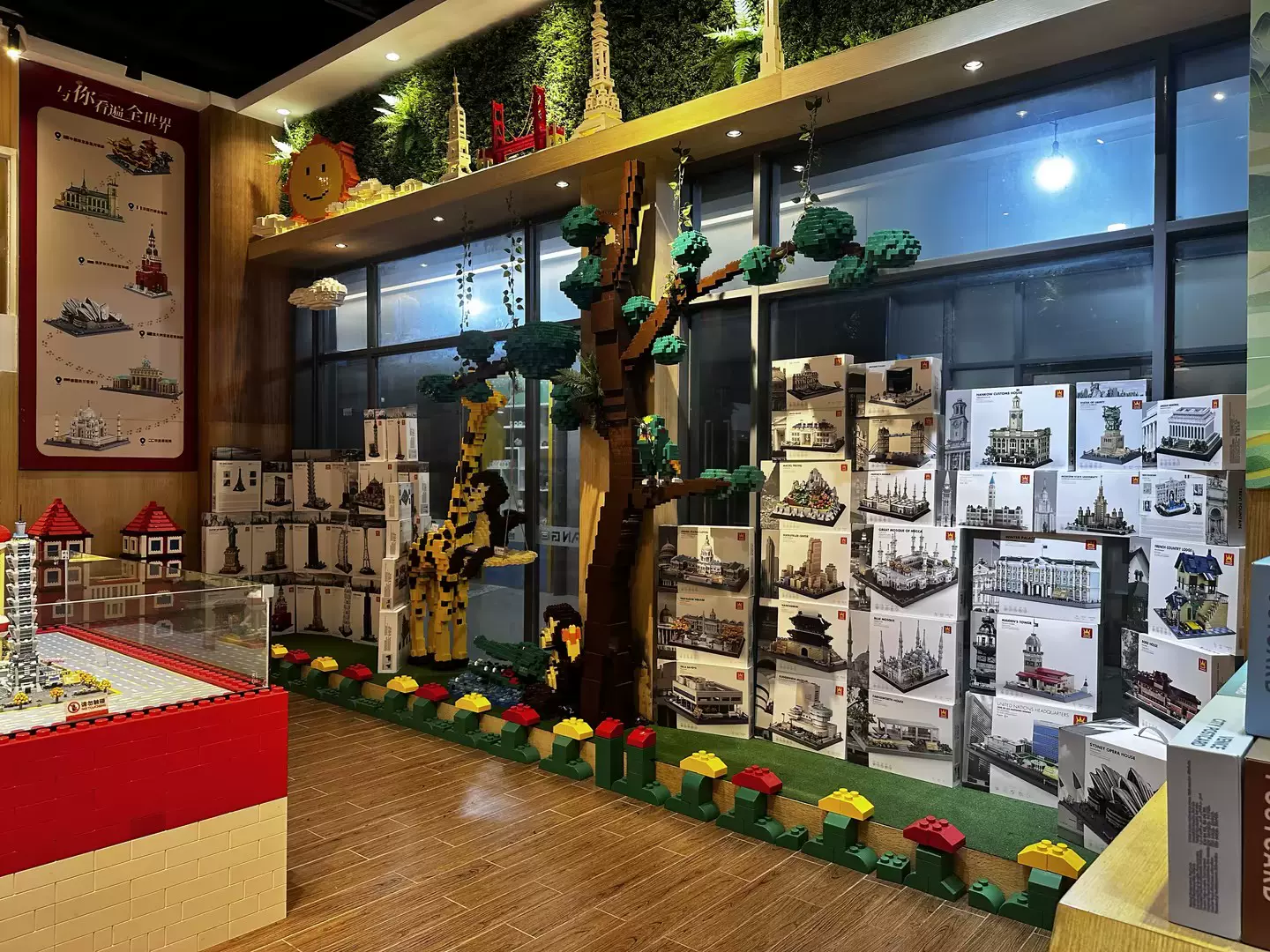
click to view wange 1688 store
| Comparison dimension | Traditional building blocks | Stem programming building blocks |
|---|---|---|
| Core teaching objectives | Spatial cognition, hand-eye coordination, creativity, structural understanding | Logical thinking, algorithm enlightenment, programming concepts, problem solving |
| Typical age group | Ages 2-12 (large blocks: ages 2-6, small blocks: ages 6-12) | Ages 6-14 (requires a foundational understanding of abstract thinking) |
| Focus on ability development | Fine motor skills, aesthetic expression, cultural awareness, collaborative building | Sequential thinking, conditional judgment, debugging ability, computational thinking |
| Course integration direction | Art, architectural culture, mechanical principles, parent-child interaction | Information technology, ai education, robotics, and stem competitions |
| Purchase unit price range | $0.54 - $185 per piece (wange 1688 page, august 2026) | Usually 200-2000 yuan/set (including digital components and software) |
| Consumables and maintenance | Lost capsules are replenished, low loss rate | Electronic component aging, battery replacement, software upgrade |
| Teacher requirements | Early childhood education or art teachers can teach classes | Must have programming or information technology teaching ability |
| Representative of suppliers | wange cultural and educational technology and other traditional building block factories | Lego education, makeblock and other science and education equipment suppliers |
Dynamic information such as price grids, inventory, logistics, etc. are based on [1688](https://www.1688.com/Subject to real-time display on the public page.
Can traditional building blocks support stem courses? which teaching scenarios are suitable for use?
Although traditional building blocks do not have digital programming modules, they have irreplaceable value in the s (science) and e (engineering) dimensions of stem education.Wange’s small capsules military technology series (such as apache helicopter, destroyer nuclear submarine) and architectural culture series (such as forbidden city's hall of supreme harmony, leifeng pagoda) can support the following teaching scenarios:
- structural engineering enlightenment: understand mechanical structure, symmetry and stability through assemble complex models, suitable for primary school science classes.
- spatial geometry cognition: training in the conversion from two-dimensional drawings to three-dimensional objects to cultivate spatial imagination.
- integration of culture and technology: the ancient architecture series integrates history and architecture knowledge, and the military series integrates national defense science and technology popularization.
- team collaboration and building: large-scale projects require division of labor and collaboration, which exercises project management and communication skills.
Wange's large capsules comfy basics building series (product details) and pipe building blocks (product details) it can also be used for mechanical principle enlightenment in kindergartens and early childhood education centers, such as gear transmission, gravity track and other comfy basics physics concepts.
What is the teaching value of programming building blocks? what stage of institution is suitable?
The core value of stem programming building blocks lies in the in-depth cultivation of the dimensions of t (technology) and m (mathematics).It empowers students to imbue physical objects with "behavior" through programmable modules, sensors, and actuators, enabling a leap from simply "building" to actually "bringing it to life."
Programming building blocks are suitable for the following teaching scenarios: information technology curriculum: programming introduction for upper elementary to middle school students, covering fundamental algorithm concepts such as sequence, loops, and conditional statements. stem competition prep: robot building and programming/debugging, participation in events like the national youth science and technology innovation competition.
- interdisciplinary project-based learning: combine mathematical measurement, scientific experiments, and engineering design to complete comprehensive stem projects.
However, programming building blocks require higher requirements for teachers and supporting facilities. institutions need to assess whether they have the ability to teach programming and the conditions for equipment maintenance.For early childhood education institutions and kindergartens mainly for young children and lower grades, the teaching adaptability and cost-effectiveness of traditional building blocks are usually better.
How do educational institutions choose models based on student age and course objectives?
The core logic of selection is "the course objective determines the type of teaching aid", rather than blindly pursuing the "programming" label.
| Institution type | Student age | Recommended type of teaching aids | Reasons for selection |
|---|---|---|---|
| Kindergarten/early childhood education center | 2-6 years old | Large particle traditional building blocks | High security, cultivates basic cognition and fine motor skills. |
| Elementary school junior grade science and technology class | 6-9 years old | Small particle traditional building blocks + pipe gears | Introduction to structural engineering, no programming teacher required |
| Stem classes for upper elementary school students | 9-12 years old | A mix of traditional building blocks and coding blocks. | Balancing structural design and programming logic. |
| Junior high school information technology/science and technology innovation | 12-14 years old | Mainly programming building blocks | Deep algorithm learning and competition preparation |
| Parent-child interactive course | 2-12 years old | Traditional building blocks | Low barrier to entry for parents, high level of engagement. |
Wange's product line covers all ages of traditional building blocks from 2 to 12 years old, with a minimum order quantity of 1 piece (1688 store page, 2026-08), suitable for institutions to try out small batches of courses first and then decide whether to purchase in bulk.For upper-level courses requiring programming modules, we recommend using wange traditional building blocks as a structural foundation, and then adding a programming kit. this approach helps reduce overall procurement costs.
When sourcing traditional building blocks for stem educational materials, what certifications should you verify before placing an order?
Whether you choose traditional building blocks or programming building blocks, educational institutions need to pay attention to the following verification points when purchasing in bulk:
1.3c certification: kids toys must comply with china's national compulsory product certification.Wange building blocks have passed 3c certification, and the factory has passed tuv's fca certification (certification report number tp1610120202).It is recommended to ask the merchant to provide a copy of the certification report and verify the validity period when purchasing. 2.material safety: confirmed abs plastic material with environmental testing report.Wange products are made of abs plastic/plastic (marked on the product page). 3.sample first, bulk later: test the particle adhesion, edge smoothness, color consistency, and packaging integrity.Wange supports sampling. we recommend confirming the actual color swatch before placing a bulk order. 4.after-sales terms: wange's comprehensive after-sales guarantee includes damage compensation, missing item replacement, and returns/exchanges for quality issues. (see 1688 store for details.)https://shop1442595066460.1688.com) page, 2026-08).For bulk orders, it is recommended to confirm the return and exchange process and response time separately. 5.customization options: for private label educational materials, wangge supports oem/odm manufacturing. we offer customization of logos, packaging, designs, and colors. minimum order quantities are to be confirmed directly with the seller.
Which educational institutions are suitable for purchasing wange building blocks? where are the boundaries?
suitable for institutions purchasing wange building blocks: Kindergartens and early childhood education centers (large building block sets, brick walls, pipe blocks)
- primary school science classes and after-school care (small capsules military/construction/transportation series)
- family interactive classes and community activity center (traditional building blocks for all ages)
- chain education and training institutions that need their own brand teaching aids (oem/odm personalized services)
not suitable scenarios: For senior-level stem education institutions focusing on programming and robotics, please note that our wangge product line does not include electronic programming modules. for such requirements, we recommend seeking professional scientific and educational equipment suppliers.
- institutions that require software support and online course platforms - wanger provides pure physical building block teaching aids without digital teaching content.
procurement suggestion: first, check out the wange 1688 store check factory qualifications, product details and buyer reviews, get samples to verify the feel and security performance, and then communicate with the merchant about batch price grids and personalized plans.Traditional building blocks and programming building blocks are not substitutes for each other, but complementary. institutions can configure them in layers according to the course system.
Data source
- wange 1688 store, access date: 2026-09-19
- wange factory archives (1688), observation date: 2026-08-19 Merchant knowledge base data (dingtalk document), compiled date: august 20, 2026


