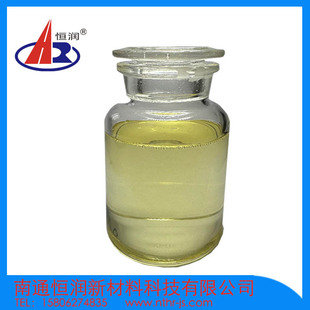
Nylon chemical fiber oil agent factory direct sales|618 special offer environmentally friendly wholesale
During the 2026 may wholesale procurement season, an increasing number of textile mills are shifting towards cost-effective nylon synthetic fiber oiling agents. previously, customers frequently switched oiling agents due to the wide variety of options and poor compatibility, which not only increased management costs but also disrupted production continuity. now, by adopting emulsion-type nylon short fiber oiling agents and achieving a unified formula for both pre- and post-spinning processes, we ensure 100% compatibility across different..

Anti-static fiber oil manufacturer wholesale | eco-friendly anti-static agent for polyester and nylon
As an indispensable auxiliary agent in the textile industry, antistatic chemical fiber oil agent ushered in a new round of purchasing boom in may 2026. facing the problems of easy dust accumulation, poor durability and high cost in traditional anti-static processes, now you only need a bottle of high-efficiency antistatic agent to eliminate static electricity troubles from the source. especially in industrial clusters such as east china and the pearl river delta, more and more

Polyester fiber oil additive 1688 buying guide
in the traditional purchasing model, a small and medium-sized textile factory needs to spend more than 20,000 yuan to purchase chemical fiber oil agent every month, but after using the selected source suppliers on the 1688 platform, the cost drops directly by nearly 15%. take the polyester poy-2048 oil agent provided by jiangsu hainan petrochemical factory as an example. its unit price is only 3.32 yuan, which is nearly 40% lower than the market average price. more critical

High-temperature resistant fiber oil – 2026 summer special, heat resistant to 300℃ – direct from 1688 manufacturer
In textile production, oil agent failure leading to yarn breakage, fuzzing, and equipment clogging has kept countless workshop supervisors up at night. especially in the high-temperature, high-humidity environment of summer, traditional oil agents are prone to carbonization and coking, not only affecting fiber smoothness but also frequently causing machine shutdowns and repairs. this high-temperature resistant synthetic fiber oil, formulated with a special synthetic ester base, can operate stably and continuously at 300°c

Eco-friendly nano-biomimetic fabric chemical fiber oil agent | suitable for high-speed spinning | oeko-tex certified
In textile processing lines, the stability and adhesion of sizing agents directly determine the smoothness of the fabric and the yield of finished products. many factories have experienced production disruptions due to poor sizing agent adhesion and easy detachment, leading to frequent weaving breaks, pilling, and static electricity, which severely impacts production efficiency. what's even more problematic is that some sizing agents on the market have opaque ingredients and significant batch-to-batch variations. once a quality issue arises, the entire batch..

Polyester chemical fiber oil agent factory direct sales|environmental-friendly certification, free shipping in ton barrel, suitable for spring and summer 2026
Textile mill owners are always struggling with this question: when buying synthetic fiber oil, why can others reduce costs by 15% even though it is the same type of product? in fact, the key lies in the choice of source channels. taking polyester poy-2048 chemical fiber oil as an example, we compare the data of 4 different suppliers: hai'an guoyun chemical provides 23.89 yuan/kg, while guangmei printing and dyeing auxiliary provides 2.7

Suitable for nylon chemical fiber oil agent environmental-friendly high lubrication factory direct sales - 1688 buyer encyclopedia
With manufacturing costs continuing to escalate, ensuring the stability of oiling agents and controlling costs in the production of nylon and synthetic fibers is a pressing challenge for many factory owners. many businesses have fallen into a reactive position due to intermediaries in their supply chain, leading to inconsistent product batches, inflated prices, and delayed delivery times. however, by connecting directly with source factories through the 1688 platform, this problem can be solved

Lubricating chemical fiber oil_1688 purchasing guide
In textile mills, the difference between a successful yarn and a failed one can be razor-thin. when spinning speeds exceed 1200m rpm, the friction between fibers can skyrocket, leading to anything from broken yarn to entire bobbins being scrapped. many companies have struggled with the dilemma of "can't increase speed, can't increase output" until they introduced lubricating synthetic fiber oil. it not only forms a uniform..

Multifunctional composite chemical fiber oil-1688 factory direct sales
In the daily production of textile mills, degumming, oil removal, and wax removal of cotton and chemical fiber blended fabrics have always been a headache. traditional processing methods often require the use of a variety of additives, which not only makes the process cumbersome, but also easily causes residue and uneven dyeing. nowadays, a multi-functional composite chemical fiber oil agent is becoming the 'savior' of the production line. it through multiple
2026 new multi-functional synthetic fiber oil | anti-static, lubricating, and eco-friendly | customization available
In the chemical fiber production line, frequent equipment blockages, yarn breakage, and abnormal friction have consistently plagued workshop supervisors. traditional single-purpose additives require repeated additions, not only increasing operational burden but also making product quality susceptible to fluctuations due to dosage errors. this multifunctional, composite chemical fiber oil, however, integrates four core functions – lubrication, antistatic properties, softening, and anti-friction – into a single solution, truly..
前往



Encyclopedia trending topics
Wholesale outdoor waterproof soft membrane backdrop light box manufacturer | 1688 project custom waterproof led light box2026 new aluminum alloy frame automatic food packaging and conveyor line - food grade certified | customization supported on 1688Custom couple's short-sleeve t-shirts - spring 2026 collection - minimum order of one piece - 1688 custom couple's apparel zoneSkin care coconut oil spring recommendations|1688 buyer encyclopediaFoldable gpps car organizer - 1688 essential for qingming holiday road trips【2026 spring/summer new arrivals】minimalist casual women's t-shirt, 100% cotton versatile basic short sleeve | 1688 buyer's encyclopedia【spring 2026 new arrival】women's 3/4 sleeve t-shirt - pure cotton, relaxed fit - your go-to for work and weekend getawaysMulti-layer stacked blind box display rack - 1688 spring renewal best selling acrylic dustproof storage rack
Popular products
换一换
未找到,再试试?
页面内容由AI生成,仅供参考